What comes after DEI
When the programs go away and the commitments dissolve, the work gets more essential.
2020 was a moment, and then there was backsliding, “diversity fatigue,” and social and political calamity. Where do we go from here?
What happened to DEI, and why it matters
When public and institutional support for “DEI” began to wane, many people considered this an excuse to walk back their commitments. For many, the proclamations were not sustainable but performative—posture rather than values. Many would-be allies complained of “diversity fatigue,” and sought to change the subject. Many BIPOC* women (and people in general), having seen this pattern of disinvestment before, decided they had had enough with white people, period. All of this leaves us in a state of three-way fracture, where old discriminations become new again, and rights and dignity are suddenly seen as dispensable. The status quo has become the norm, and in many cases, progress is slipping backwards.
This breakage is three-way:
- between institutions and their stated values,
- between people who want solidarity and need a practice to sustain it, and
- between communities that need to come together across difference and collaborate for positive change, right now.
Just a few data points indicate the stark inequities: roughly 600,000 Black professional women were pushed out of the U.S. workforce over the past year and a half; Black women’s maternal mortality sits at more than three times the rate of white women’s; Black households hold less than 5% of U.S. wealth. We reside in an unequal, unfair society, and those who wish to help change the status quo have found themselves distanced, disillusioned, and discouraged.
To be clear: racism is the foundational lever but not the only one. Sexism, classism, xenophobia, ableism—the isms are many and they are what keep us separated.
When institutions and systems fail women of color without consequence, standards of protection become conditional. Eventually, these conditions come for all women, and all of us.
*About “BIPOC”: we know the acronym is evolving and can feel reductive and misaligned for many. We use it here as a familiar shorthand.
What this practice is instead
Programs need budget lines, managerial sponsors, and institutional sign-off. A practice just needs your willingness and commitment. The Brave Sis Project Solidarity Lab is a framework or an approach you put into your own life, your relationships, your leadership, your community, your influence. You don’t need a DEI office to do this work, and you don’t need anyone’s permission to broaden your mindset.
Women who did the work—because they had to
Many of the Foremothers we celebrate changed their world without budget lines or policy proclamations, and they did it under possibly worse restraints than we know today. They are our inspiration and our guide. There are thousands more to discover.
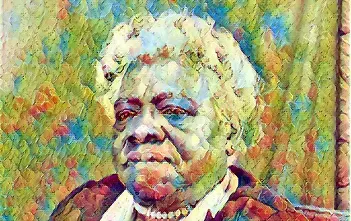
Mary McLeod Bethune
Opened a school for Black girls in Daytona Beach, Florida, in 1904, with $1.50 and conviction. It became Bethune-Cookman University, one of the most prestigious HBCUs in the country. Her girls deserved more, and so she built it.
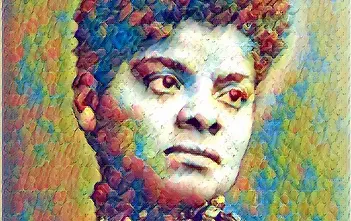
Ida B. Wells
A journalist and organizer who risked life and limb to expose lynching and challenge the civic lie that racial terror was justice. Her work reminds us how important it is to tell the truth and expose crimes against humanity.
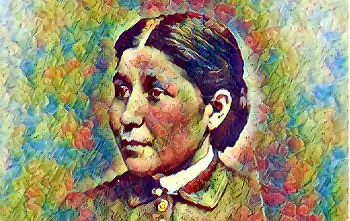
Susan La Flesche Picotte
The first Native American woman to earn a medical degree, an Omaha physician who built clinical care for her community in the face of federal neglect and broken treaty promises. Her legacy shows us that when communities are resourced, we not only stay alive, we can thrive.
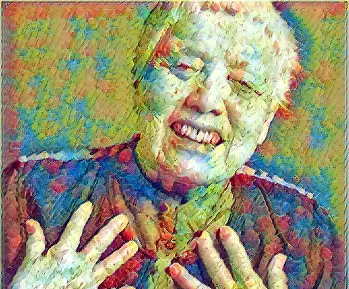
Grace Lee Boggs
A Chinese American philosopher, activist, and organizer who spent more than seven decades building community power in Detroit. She showed us that revolution is not a one-off event but is a practice, grown block by block, relationship by relationship, in the place where you actually live. And it can have global impact!
There are dozens, hundreds more to celebrate and emulate!
"I am not free while any woman is unfree, even when her shackles
are very different from my own."
— Audre Lorde
The iconic Audre Lorde’s words remind us what solidarity is all about.
We have recently moved our site to a new enterprise server. If you experience any tech issues, please contact us at info@bravesis.com