Unengaged to Ally, Advocate to “Sister,” Part Two
Welcome to Part Two of our flagship learning experience, where awareness becomes practice. Across six lessons: dismantle tone policing and the stereotypes beneath it, learn to see power in all its forms—visible, invisible, integrated, sustained—and shift it, abandon the white savior complex, name tokenism for what it is, bring buried history out of hiding, and close the cognitive distance that keeps Beloved Community out of reach.
You didn’t need more awareness.
You needed new skills for becoming a solidarity and unity leader.
Practice.

There is a gap between understanding something and being able to apply the knowledge in the moment. Most equity education lives entirely on the understanding side of that gap, or it is stuck in the feeling part. But you know, feelings are not facts, and feelings too often risk turning into performance or short-term change. Part Two gives you tools to go deeper.
We call this the expert practice. We assume you already possess the vocabulary and know enough of the history, so we go into deeper terrain: how to identify what tone policing looks and sounds like, so you can avoid it and also help stop others from doing it; where your positional power actually sits and how to use it for the greater good; how white saviorism and do-gooding sometimes devolves into celebrating the monoculture and alienating those you might most want to collaborate with for change; and how tokenism, colorism, and other in-group ills keep communities of color as divided from each other as efficiently as they divide them from you.
But a very important lesson this curriculum wants to share is the danger of over-intellectualizing. This is “niceness” turned into a lifestyle, and it is a very common way to avoid taking action, and to seem respectable and “good”—but those you want to work with can see it as fakery and a waste of their time. Cognitive distance feels like rigor, but it is usually just distance.
If Part One names the path, Part Two teaches the inner and interpersonal skills to walk it—especially when discomfort, conflict, or repair are involved. It’s for people ready to facilitate, lead, and influence change in real time.

Tools for power, repair, and the long haul
Six modules that turn what you know into what you can do, in real time, under pressure.
Part Two is where the work stops being about your understanding and starts being about your effect. It deals in the specific moments where solidarity is won or lost: the meeting where someone’s tone gets policed, the initiative where you’re about to take the lead you should be handing over, the family dinner where a comfortable half-truth goes unchallenged. It builds on what we learned in our “Brave Awareness” course and in Part One, and brings it all home, with conviction and clarity.
As in Part One, every lesson carries journaling prompts, quizzes, resources, and a Flip It and Reverse It section—this time on elitism inside communities of color, “you talk like a white girl,” and the white advocates history quietly wrote out.
Across the six modules, here is what you will actually do:

- Retire tone policing for good—recognize it in yourself, name it in a room, and understand the stereotypes sitting underneath it.
- See power in all four of its forms—visible, invisible, integrated, sustained—and find where yours actually sits.
- Climb the Privilege Staircase and get specific about which step you’re standing on, and who is standing below it.
- Move power from control to collective solidarity, and learn what real participation requires of the person who currently holds the mic.
- Abandon the white savior complex, and trace exactly how film, media, and philanthropy taught it to you.
- Name tokenism where it operates, including the “model minority” myth that keeps communities of color divided from one another.
- Bring buried history out of hiding, with a Baker’s Dozen of myths, mistruths, and half-truths you were taught in school or on TV. This section will hopefully excite you about a lifetime of learning and discovery around suppressed histories.
- Build your own resource library, so the learning outlasts the course.
- Stop cognitive distancing—the over-intellectualizing that lets you discuss a problem indefinitely without ever moving on it.
- Sit with Beloved Community as a working goal, not a slogan, and complete a take-home reckoning that turns six lessons into a standing commitment.

WHITE IDENTIFYING WOMEN
HOW CAN YOU BECOME A REAL ALLY IN A POST-DEI WORLD?
Feeling the rift—and ready to do something about it?
Maybe the distance between you and the Black women or other women of color in your life has been growing. Maybe you want to be part of healing and solidarity but don’t know where to begin.
Our times are fractured: democracy is teetering, DEI has been wiped off the slate, history is being erased, laws are being re-written. Many Black women are done with performative allyship—words aren’t enough anymore. And some are feeling a pull to disengage from white people altogether.
But in today’s world, our success and thriving relies on mutuality, collaboration, solidarity, unity, and trust—all the goals of Brave Sis Project and the Solidarity Lab. Authentic and lasting change starts with honest acknowledgment: privilege, power, and white norms shape our systems, and silence sustains them. That’s what Part Two of our signature course, “Unengaged to Ally, Advocate to ‘Sister’” is all about.
If you’re ready to learn, reflect, and lead with sincerity, this is your invitation. Your courage to engage can shift and expand power, and help construct the world and communities we wish for.
WOMEN "OF COLOR"
HOW DO YOU NAVIGATE MIXED-SPACES TODAY?
Sick of the separation but no longer willing to do all the labor?
To My Black Sisters:
You’ve (we’ve) held so much for so long—being the explainer, the forgiver, the bridge. It’s exhausting. You deserve peace, protection, and partnership rooted in truth, not labor.
This curriculum offers a reset. Frameworks and practices to help you stay grounded, show up strong, and lead without carrying the whole load. Because when we detach completely, the divisions win—and so do the systems designed to keep us apart.
To Non-Black Women of Color:
Our journeys overlap—in courage, struggle, and brilliance. But we’ve also faced our own divides: colorism, classism, xenophobia. The path forward is mutual celebration and shared purpose. Some of the unlearning means revisiting our own homes and communities: interrogating narratives our families absorbed in the long chase for proximity to whiteness, and naming anti-Blackness where it sits among us. We do this work out of love for our people, not anger, and because we are committed to a more just world where solidarity and unity prevail.
Let’s build a new way forward, together. Are you ready?
Welcome to
"Unengaged to Ally, Advocate to "Sister": Part Two
Part Two of the six-module, self-paced course for women building authentic solidarity and trust across race—where awareness becomes everyday practice.
Created by Nautilus Award-winning author Rozella Kennedy, and based on the SAIN et SAUF™ Method, trusted by thousands of readers and learners across more than a dozen countries.
This course is for women from white or white-adjacent backgrounds who want to build genuine trust and collaborate across difference, as well as for Women of Color looking for tools and clarity to navigate and lead conversations with aspiring allies.
It is entirely self-paced, with video lessons, reflection prompts, and downloadable resources you can revisit anytime.
This is a space for honest reflection and brave learning, designed as a direct response to the times we live in.
Course Two builds on the allyship continuum introduced in Course One by moving from awareness to practice. Where Course One helps you locate yourself across the stages from Unengaged to Sister and provided foundational information about the histories and realities of inequity and discrimination that break unity, solidarity, and trust, Course Two gives you the emotional literacy, communication tools, and accountability practices to stay engaged across difference, repair harm, and sustain solidarity over time.
If Course One names the path, Course Two teaches the inner and interpersonal skills to walk it—especially when discomfort, conflict, or repair are involved. It answers a new and urgent call: to step forward with clarity, integrity, and a real commitment to solidarity and change.
The curriculum is offered in two parts, with six modules each, offering opportunities for self-reflection, new vocabulary, honest dialogue, deep exploration, fun, and practical strategies for meaningful change.
Together, we’ll challenge the fears and misunderstandings that hold us back, discover the motivations that move us forward, learn key concepts and tactics that break down barriers and bias, and develop tools for starting authentic, transformative conversations—so we can build stronger solidarity and connection for collective action.
Whether you’re new to this work or have been on this path for a while, you’ll find clarity, support, and challenge here. Each section offers journaling prompts, reflective exercises, community discussion topics, invitations to deeper dives, and actionable strategies so you can build deeper trust, skill, and accountability—whether for your own growth, or to become a more effective guide for others.
Price
$249
6 modules
Learning Format
Self-paced
Access
Lifetime access
“I consider myself a ‘do-er’ and a ‘humble servant.’ Yet, I wasn’t fully able to see how some of the legacy biases and ‘blind-spots’ handed down through my own community were holding me back from being the kind of collaborator and aspiring ‘ally’ I want and need to be.”
— JD, workshop attendee
FAQ
1. How long does the full curriculum take to deliver?
Course One (6 lessons) typically runs 8-12 weeks; Course Two adds another 6-8 weeks. This can be adapted for intensive retreats or ongoing monthly sessions.
2. Is this only for white participants?
No—this curriculum serves everyone across racial, cultural, and gender identities.
3. Do I need to take Course One first?
It is highly recommended. Course One provides the foundational curricular materials that Course Two builds upon.
4. What if we've already done DEI training?
This goes deeper. Most participants find this work fundamentally different from traditional diversity training—it’s about personal transformation and authentic relationship-building, not compliance.
5. Can I facilitate this learning with a group?
We do have students who self-organize among themselves to meet in cohorts that they schedule. They use this time to process and support each other more deeply around the topics raised in the curriculum. We provide a facilitators’ guide to ground the conversations as wanted (free to the group leader). Group leaders must meet with us prior to starting a curriculum to go over a few ground rules and expectations, mostly around staying faithful to the curriculum. Each cohort member must be fully and individually enrolled in the course.
6. What does “decentering whiteness” actually mean in practice?
It means questioning the assumption that white experience, white comfort, white timelines, and white leadership are the default that everything else is measured against. In practice: listening before advising, following before leading, funding without controlling, and remaining steady in the conversation when it begins to get messy. It is not about self-erasure. It is about making more room.
7. I’ve been doing this work for years. Will Part Two have anything new for me?
That depends on what “doing this work” has meant. If it has meant educating others, absorbing harm, and carrying institutional change without reciprocity, Part Two may offer less new information and more restoration—the SAIN et SAUF framework was built to be sustainable, meaning built with you in mind, not only with the people catching up. Many experienced practitioners find that naming the methodology gives them language for what they already knew, and a community practicing alongside them.
8. What role does joy play in this?
Joy is not incidental to this work, it is evidence that the work is real. The Foremothers celebrated. They sang, they organized, they built institutions that were also communities. Cultural competence that is genuinely generous—not extractive, not exoticizing—makes room for pleasure, creativity, and delight. If your practice of solidarity feels only like obligation, it will not last.
Curriculum Two Course Content
Course Content
About Your Course Creator
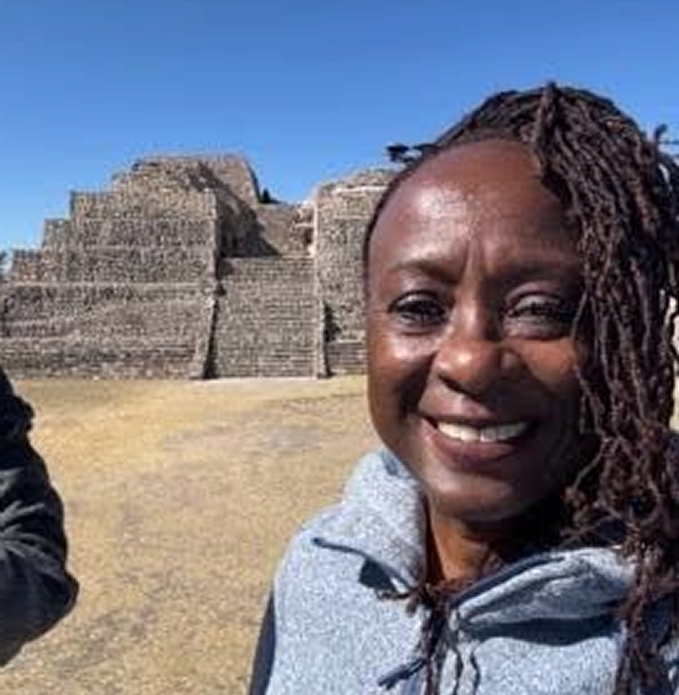
Rozella Kennedy is an award-winning author and the founder of Brave Sis Project. Her Nautilus Award-winning book, Our Brave Foremothers: Celebrating 100 Black, Brown, Asian, and Indigenous Women Who Changed the Course of History, published by Workman/Hachette, has reached readers across six continents and supported foundations, nonprofits, and justice-focused groups worldwide. She writes long-form essays and mini-coaching at rozellakennedy.substack.com
© 2026 Brave Sis Project. All rights reserved.